Popular Research Topic
Herman Miller and
The Henry Ford
collections The Henry Ford holds.
The Henry Ford and the Herman Miller Furniture Company have a long history together. Artifacts made by the renowned company hold a prominent role in our collection and on the museum floor. Numerous acquisitions and donations by the company have made The Henry Ford is one of the primary holders of objects and archival materials related to Herman Miller products and projects.
In 1988, the Herman Miller Furniture Company established the Herman Miller Consortium to share the historical product collection that had been accumulating as part of Herman Miller’s corporate archives in Zeeland, Michigan. Herman Miller approached The Henry Ford due to its focus on innovation in America, an interest in design processes and prototyping, and the societal implications of manufactured products. The collection contained approximately 800 pieces of furniture as well as a large quantity of product literature. Instead of all this material going to just one institution, twelve additional art and history museums were chosen due to their proximity to Herman Miller manufacturing facilities. These 13 institutions now make up the Herman Miller Consortium. A database was created in 2004 that provides searchable records of all furniture collectively held by these 13 consortium members.
The Henry Ford welcomed the Herman Miller Collection (89.177) in 1989, which includes several hundred pieces of furniture and components, as well as hundreds of archival documents, such as advertisements, postcards, trade catalogues, product manuals brochures, and hangtags. Additional donations from the company followed, including a large acquisition of material related to designer Alexander Girard in 1992, called the Girard Fabrics Collection (92.48), and in 2005, the Aeron Chair Presentation Collection (2005.92.19). Building upon these donations from Herman Miller, curatorial staff at The Henry Ford have since acquired artifacts and collections related to the company’s designers, including archival collections like the Bill Stumpf Papers (2009.141), the Robert Propst Papers (2010.83), individual artifacts like the Prototype Eames Fiberglass Chair and the Kiosk From IBM Pavilion at the 1964 New York World's Fair—and even an entire exhibit, Mathematica: A World of Numbers and Beyond…
Included in the donation of the Bill Stumpf Papers (2009.141) are the personal and studio libraries of Stumpf. These collections include more than 1,300 titles that were used by Bill Stumpf in his design work, as well as titles that were related more to his personal interests. The libraries together give a holistic look into Stumpf’s research practices and inspiration.
While some of this material has been digitized and is searchable in our Digital Collections, much is not. Researchers interested in specific topics related to the company’s history should reach out to research.center@thehenryford.org for additional assistance.
THF Archival Finding Aids:
- Herman Miller Collection (89.177)
- Girard Fabrics Collection (92.48)
- Bill Stumpf Papers (2009.141)
- Robert Propst Papers (2010.83)
- Herman Miller Aeron Chair Presentation Collection (2005.92.19)
- Don Chadwick Papers (2019.148)
Key Designers of Herman Miller
Gilbert Rohde
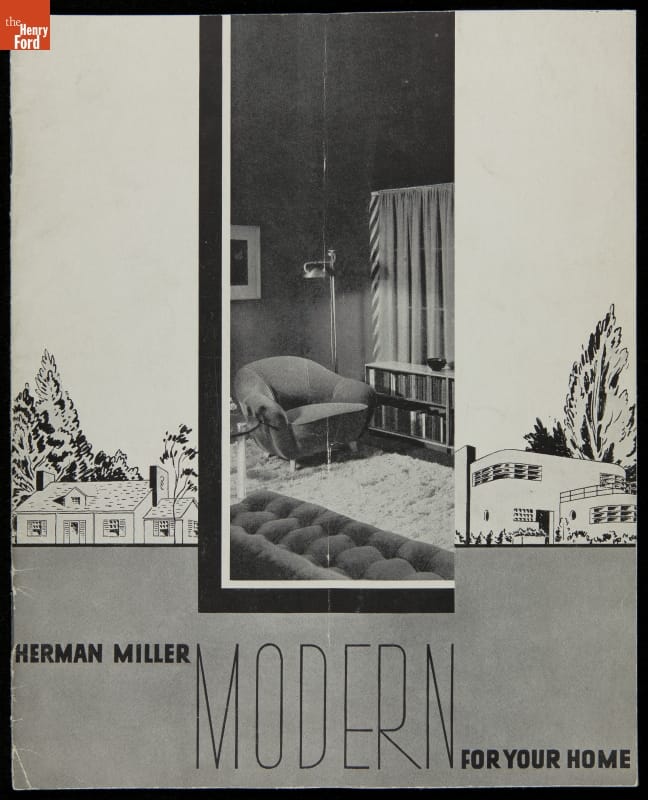
Industrial designer Gilbert Rohde helped spur the American furniture industry's transition from historical revivals toward a modern aesthetic. In 1930, industrial designer Gilbert Rohde told the president of Herman Miller, D.J. De Pree, “I know how people live and I know how they are going to live.” He designed furniture for Herman Miller until his untimely death in 1944. Rohde helped to transform the company from a struggling revivalist manufacturer into a thriving company on the leading edge of American Modernism.
Related Content:
George Nelson
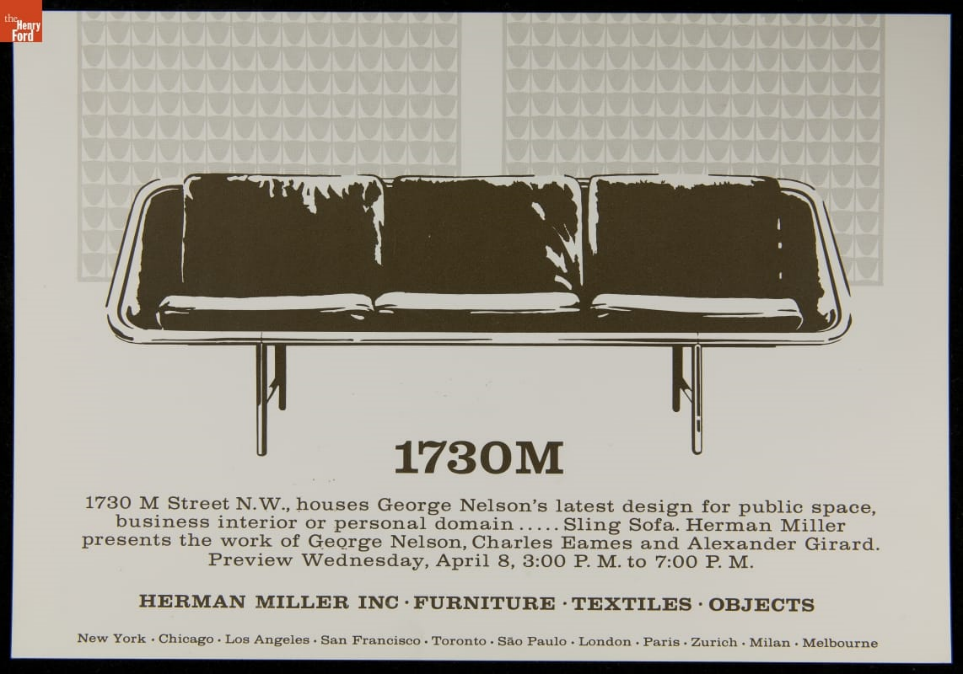
George Nelson was a trained architect, a critic, an educator, and an industrial designer. After Gilbert Rohde’s untimely death, Nelson was hired to replace him as the Director of Design at the Herman Miller Furniture Company. If Rohde planted the seed of modernism at Herman Miller, Nelson cultivated and grew it. His furniture and graphic design moved the company forward. Perhaps more significantly, Nelson is responsible for the hiring of key designers like Charles and Ray Eames, Alexander Girard, and Isamu Noguchi. Alongside D.J. De Pree, Nelson created a design culture and depth of design expertise at Herman Miller that would impact the company for many years to come.
Related Content:
Charles and Ray Eames
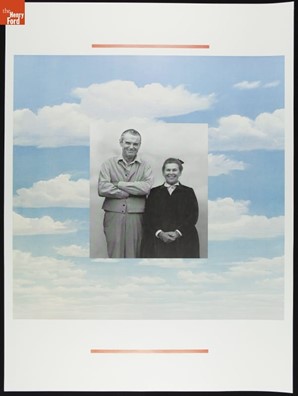
Charles and Ray Eames—perhaps more than any other designers—came to symbolize the ideals of modernism to the American public. A husband-and-wife design team, they founded the Eames Office in 1943. Their early venture to create a complex-curved plywood chair in a single shell led to the development of numerous groundbreaking furniture forms. But they weren’t only furniture designers—together they designed everything from buildings to toys and films to museum exhibits.
Related Content:
Alexander Girard
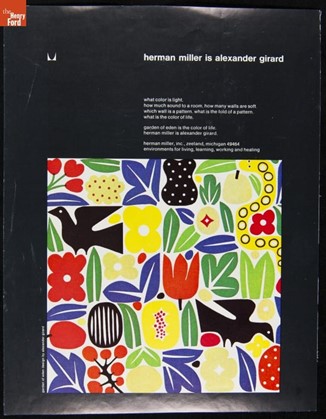
Known for his mastery of color and texture, designer Alexander Girard was a trained architect, a visionary textile designer, and an avid collector of folk art. He was the almost unbelievably prolific Director of Design for Herman Miller Furniture Company’s textile division from 1952–1973 while simultaneously completing independent projects, such as comprehensive airline redesigns and restaurant interiors. Girard’s approach to design moved American modernism from its minimalist roots to a more joyful, humanistic design that was more “synonymous with living.”
Related Content:
Isamu Noguchi

Isamu Noguchi was a Japanese-American designer working in product and furniture design, lighting, sculpture, and landscape architecture. Over the course of his six-decade career, Noguchi was driven to synthesize the traditions and materials of Japanese culture with the clean-lined abstractions of modernism. His belief that “everything is sculpture” and that objects should exist as part of a “total environment” led to an impressive roster of commissions for fountains, public art, parks, playgrounds, gardens, and stage sets. In 1937, he styled the Zenith “Radio Nurse” receiver—the first baby monitor. His collaboration with Herman Miller began in 1947 with the creation of the iconic glass-topped “Noguchi table,” which remains in production today.
Related Content:
Robert Propst
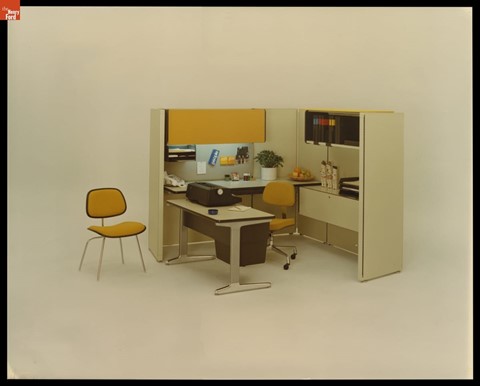
In 1960, Robert Propst became the director of the newly formed Herman Miller Research Division located in Ann Arbor, Michigan. The founder of Herman Miller, D.J. DePree, saw potential in Propst’s ambitious thinking and his ability to broaden the company’s product range beyond furniture designs. Propst’s archive reveals an interest in the power of systems and optimizing existing processes and products—from timber harvesting to office landscapes and children’s toys to medical products. Two of his most impactful projects were holistic environments designed for high-impact workplaces: the improved Action Office II system (1968), and the moveable “coherent structures” of the Co/Struc system designed for hospitals (1971).
Related Content:
Bill Stumpf
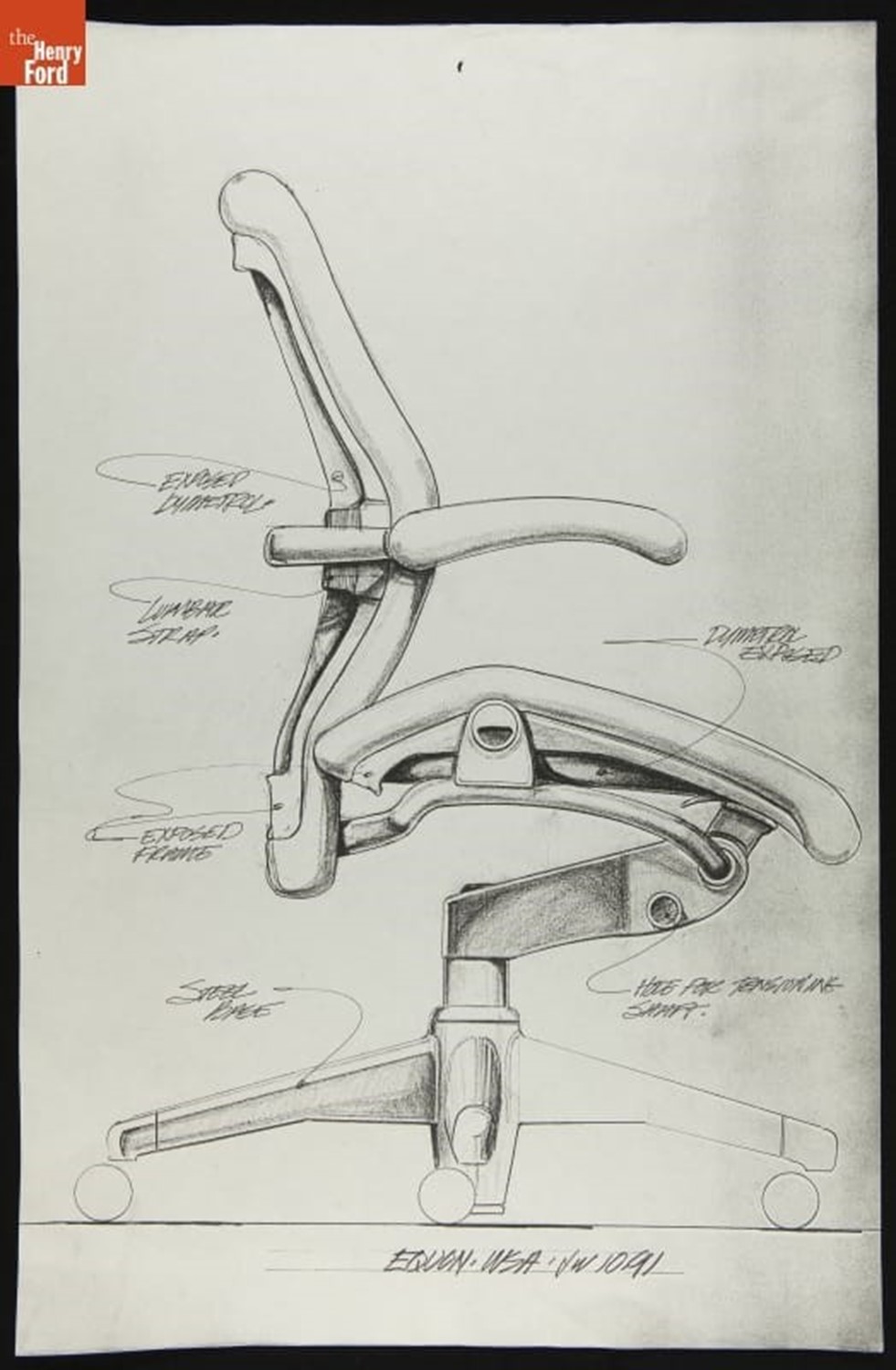
Bill Stumpf specialized in ergonomic chair and seating design. From 1970 to 1973, Stumpf served as Vice President of the Herman Miller Research Corporation in Ann Arbor, Michigan. He later shifted into a role as an independent contractor with the company. In 1976, Stumpf’s created the first ergonomic office chair, the Ergon. Some of his best-known work for Herman Miller was co-designed with Don Chadwick, including the Equa (1984) and Aeron (1994) chairs. In collaboration with Chadwick, Stumpf also contributed to the Metaform project, which used Universal Design principles to create home and hospital furniture that would allow people to age in their own homes. With Jeff Weber, he designed the Embody chair and served as principal designer of the Ethospace office system with Jack Kelley.
Related Content:
Don Chadwick
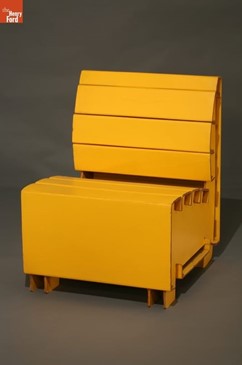
Don Chadwick is one of the noted Herman Miller industrial designers, responsible for projects like the Ergon and Aeron chairs in collaboration with Bill Stumpf, as well as the Chadwick Modular Seating system and the Ethospace system. The grandson of a cabinet maker, Chadwick credits his grandfather with his own interest in working with his hands rather than being “a numbers guy.” His interest in furniture was sparked in college after attending a lecture by Charles and Ray Eames. After graduation, Chadwick worked for architect Victor Gruen, where he continued to develop his signature style of structured, innovative designs that value form just as much as function. While many of his designs were produced in partnership with Herman Miller, Inc., today, Chadwick maintains his own design studio—Chadwick Studio—in Los Angeles, where he continues to produce new work.
Related Content:
Further Reading:
- Auscherman, Amy, Sam Grawe, and Leon Ransmeier. Herman Miller: A Way of Living. 2019. Print.
- Berry, John R, and John R. Berry. Herman Miller: Classic Furniture and System Designs for the Working Environment. London: Thames & Hudson, 2005. Print.
- De, Pree H. Business as Unusual: The People and Principles at Herman Miller. Zeeland, Mich: Herman Miller, 1992. Print
Related Content
Artifacts Related to Herman Miller Furniture Company and The Henry Ford

Herman Miller Advertisement, "Beware of Imitations," December 1963
Artifact
Advertisement
Date Made
December 1963
Place of Creation
Keywords
Object ID
89.177.449
Credit
From the Collections of The Henry Ford. Gift of Herman Miller, Inc.
Location
Not on exhibit to the public.
Get more details in Digital Collections at:
Herman Miller Advertisement, "Beware of Imitations," December 1963
What is The Henry Ford?
The national attraction for discovering your ingenuity while exploring America’s spirit of innovation. There is always much to see and do at The Henry Ford.

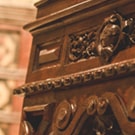
Capelli Stool, 2004
Artifact
Stool (Seating furniture)
Date Made
01 December 2004
Object ID
2009.141.19
Credit
From the Collections of The Henry Ford. Gift of the Stumpf Family.
Get more details in Digital Collections at:
Capelli Stool, 2004
What is The Henry Ford?
The national attraction for discovering your ingenuity while exploring America’s spirit of innovation. There is always much to see and do at The Henry Ford.


"Chairs Designed by Charles Eames Executed by Herman Miller," 1954
Artifact
Postcard
Creators
Place of Creation
Keywords
Object ID
89.177.203
Credit
From the Collections of The Henry Ford. Gift of Herman Miller, Inc.
Location
By Request in the Benson Ford Research Center
Get more details in Digital Collections at:
"Chairs Designed by Charles Eames Executed by Herman Miller," 1954
What is The Henry Ford?
The national attraction for discovering your ingenuity while exploring America’s spirit of innovation. There is always much to see and do at The Henry Ford.


Catalog for Herman Miller Furniture, "Soft Seating," circa 1956
Artifact
Trade catalog
Date Made
circa 1956
Creators
Place of Creation
Keywords
Object ID
89.177.959
Credit
From the Collections of The Henry Ford. Gift of Herman Miller, Inc.
Location
By Request in the Benson Ford Research Center
Get more details in Digital Collections at:
Catalog for Herman Miller Furniture, "Soft Seating," circa 1956
What is The Henry Ford?
The national attraction for discovering your ingenuity while exploring America’s spirit of innovation. There is always much to see and do at The Henry Ford.

Eames Molded Plywood Leg Splint, circa 1943
Artifact
Splint (Surgery)
Date Made
circa 1943
Summary
At the start of World War II, the splints used for supporting broken limbs were heavy, inflexible, and made of increasingly scarce metal. Designers Charles and Ray Eames created a lightweight, strong, and adaptable leg splint design--and developed an innovative plywood molding process to produce them. The Eames molded leg splint became a highly effective solution for the military as well as a design object.
Place of Creation
Object ID
89.177.13
Credit
From the Collections of The Henry Ford. Gift of Herman Miller, Inc.
Get more details in Digital Collections at:
Eames Molded Plywood Leg Splint, circa 1943
What is The Henry Ford?
The national attraction for discovering your ingenuity while exploring America’s spirit of innovation. There is always much to see and do at The Henry Ford.
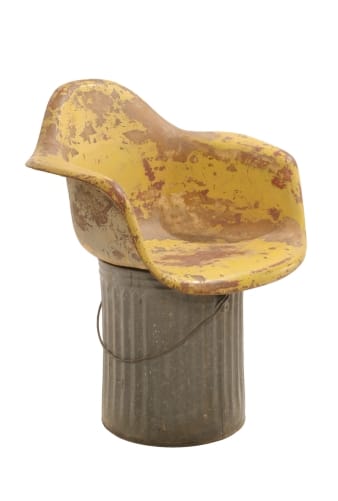
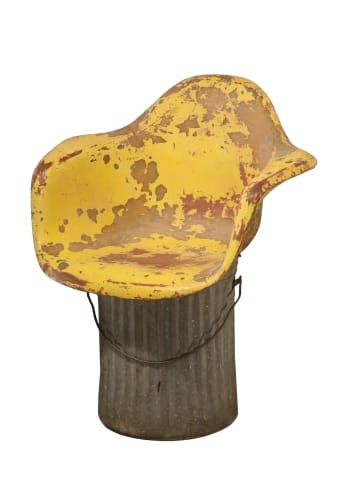
Prototype Eames Fiberglass Chair, circa 1949
Artifact
Armchair
Date Made
circa 1949
Summary
Charles and Ray Eames wanted to design affordable high-quality furniture. To this end, Charles brought a mock-up of a chair to John Wills, a boat builder and fiberglass fabricator, who created two identical prototypes. Charles took one: it became the basis for what would become a modern design icon. This is the other: it lingered in Will's workshop, used over four decades as a utility stool.
Place of Creation
Keywords
Object ID
95.167.1
Credit
From the Collections of The Henry Ford.
Get more details in Digital Collections at:
Prototype Eames Fiberglass Chair, circa 1949
What is The Henry Ford?
The national attraction for discovering your ingenuity while exploring America’s spirit of innovation. There is always much to see and do at The Henry Ford.


Eames Lounge Chair and Ottoman, Introduced in 1956
Artifact
Armchair
Summary
Charles Eames, co-designer of this chair, felt it had "a sort of ugliness" about it--although he conceded that "it has apparently given a lot of pleasure to people." In production since 1956, it is one of the most recognizable pieces of 20th Century furniture--a design that meshes elemental luxury with the finely honed simplicity of Charles and Ray Eames' best work.
Place of Creation
Keywords
Object ID
86.22.1
Credit
From the Collections of The Henry Ford.
Get more details in Digital Collections at:
Eames Lounge Chair and Ottoman, Introduced in 1956
What is The Henry Ford?
The national attraction for discovering your ingenuity while exploring America’s spirit of innovation. There is always much to see and do at The Henry Ford.


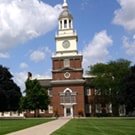
Kiosk From IBM Pavilion at the 1964 New York World's Fair
Artifact
Kiosk
Date Made
1963-1964
Summary
The kiosk, designed by the office of Charles and Ray Eames, is the sole survivor of several similar small structures installed within the vast IBM Pavilion at the 1964 New York World's Fair. Its light-hearted appearance -- suggesting carousel, fairground, and bandstand architecture -- was a counterbalance to the highly advanced computing technologies IBM was showcasing in the pavilion.
Place of Creation
Object ID
2013.78.1
Credit
From the Collections of The Henry Ford.
Get more details in Digital Collections at:
Kiosk From IBM Pavilion at the 1964 New York World's Fair
What is The Henry Ford?
The national attraction for discovering your ingenuity while exploring America’s spirit of innovation. There is always much to see and do at The Henry Ford.

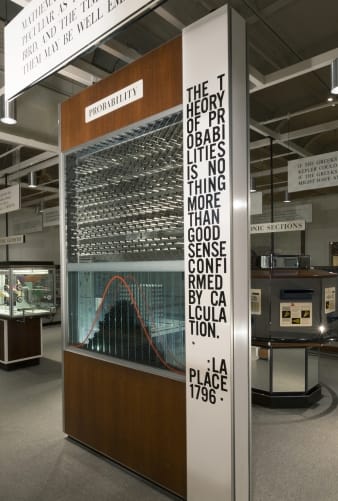

"Probability Board" from Mathematica: A World of Numbers and Beyond Exhibition, 1960-1961
Artifact
Installation (Exhibition)
Date Made
1960-1961
Place of Creation
Keywords
Object ID
2015.16.1.6.1
Credit
From the Collections of The Henry Ford.
On Exhibit
at Henry Ford Museum in Mathematica: A World of Numbers and Beyond
Get more details in Digital Collections at:
"Probability Board" from Mathematica: A World of Numbers and Beyond Exhibition, 1960-1961
What is The Henry Ford?
The national attraction for discovering your ingenuity while exploring America’s spirit of innovation. There is always much to see and do at The Henry Ford.


"Textiles & Objects" Banner, Designed by Alexander Girard, 1961
Artifact
Banner
Date Made
1961
Summary
In 1961, Herman Miller opened the avant-garde "Textiles and Objects Shop" in New York City. Designer Alexander Girard conceived of the idea, designed the shop, and stocked it with textiles, furniture, handcrafted objects, and even folk art from around the world. This iconic banner -- with screen printed text on Girard's "April" textile -- hung in the storefront window.
Keywords
Object ID
92.48.5.1
Credit
From the Collections of The Henry Ford. Gift of Herman Miller, Inc.
Location
Not on exhibit to the public.
Get more details in Digital Collections at:
"Textiles & Objects" Banner, Designed by Alexander Girard, 1961
What is The Henry Ford?
The national attraction for discovering your ingenuity while exploring America’s spirit of innovation. There is always much to see and do at The Henry Ford.


Maquette of the Alexander Girard Mural for the Herman Miller New York Showroom, 1973-1974
Artifact
Maquette
Date Made
1973-1974
Creators
Object ID
92.48.5.2
Credit
From the Collections of The Henry Ford. Gift of Herman Miller, Inc.
Location
Not on exhibit to the public.
Get more details in Digital Collections at:
Maquette of the Alexander Girard Mural for the Herman Miller New York Showroom, 1973-1974
What is The Henry Ford?
The national attraction for discovering your ingenuity while exploring America’s spirit of innovation. There is always much to see and do at The Henry Ford.

Prototype Mirror, Designed by Alexander Girard for Herman Miller's Textiles & Objects Shop, 1960-1962
 Details
Prototype Mirror, Designed by Alexander Girard for Herman Miller's Textiles & Objects Shop, 1960-1962
Artifact
Mirror
Date Made
1960-1962
Summary
In 1961, Herman Miller opened the avant-garde "Textiles and Objects Shop" in New York City. Designer Alexander Girard conceived of the idea, designed the shop, and stocked it with his own textiles, furniture, and objects, like this prototype mirror. The shop also sold furniture designed by other Herman Miller designers, like Charles and Ray Eames and George Nelson, and folk art objects carefully selected by Girard.
Place of Creation
Object ID
92.48.5.3
Credit
From the Collections of The Henry Ford. Gift of Herman Miller, Inc.
Location
Not on exhibit to the public.
Get more details in Digital Collections at:
Prototype Mirror, Designed by Alexander Girard for Herman Miller's Textiles & Objects Shop, 1960-1962
What is The Henry Ford?
The national attraction for discovering your ingenuity while exploring America’s spirit of innovation. There is always much to see and do at The Henry Ford.

Environmental Enrichment Panel, "Girls," Designed by Alexander Girard for Herman Miller, 1972
Details
Environmental Enrichment Panel, "Girls," Designed by Alexander Girard for Herman Miller, 1972
Artifact
Wall hanging
Date Made
1972
Summary
Alexander Girard, Herman Miller Textile Division's Director of Design, created a series of forty folk art-inspired graphic panels aptly named "Environmental Enrichment Panels" in 1972. They were meant to enrich the office environment, adorning the moveable walls of Robert Propst's Action Office II -- more commonly known as the cubicle.
Object ID
92.48.4.1
Credit
From the Collections of The Henry Ford. Gift of Herman Miller, Inc.
Location
Not on exhibit to the public.
Get more details in Digital Collections at:
Environmental Enrichment Panel, "Girls," Designed by Alexander Girard for Herman Miller, 1972
What is The Henry Ford?
The national attraction for discovering your ingenuity while exploring America’s spirit of innovation. There is always much to see and do at The Henry Ford.


Propst Prototype Clock, 1961
Artifact
Clock
Date Made
1961
Creators
Place of Creation
Keywords
Object ID
2010.83.15
Credit
From the Collections of The Henry Ford. Gift of the Family of Robert L. Propst.
Location
Not on exhibit to the public.
Get more details in Digital Collections at:
Propst Prototype Clock, 1961
What is The Henry Ford?
The national attraction for discovering your ingenuity while exploring America’s spirit of innovation. There is always much to see and do at The Henry Ford.


Action Office Project Drawing by Robert Propst, April 1, 1964
Artifact
Drawing (Visual work)
Date Made
01 April 1964
Summary
Action Office, conceptualized by Robert Propst with final design by George Nelson, was rooted in Propst's research into office function and worker behavior. The system was not a commercial success: manufacturing costs were high, and it was, in Propst's words, "too showy and bright for serious consideration as a middle management tool." Propst went on to design the hugely successful Action Office 2 cubicle-based system.
Creators
Keywords
Object ID
2010.83.645
Credit
From the Collections of The Henry Ford. Gift of the Family of Robert L. Propst.
Location
By Request in the Benson Ford Research Center
Get more details in Digital Collections at:
Action Office Project Drawing by Robert Propst, April 1, 1964
What is The Henry Ford?
The national attraction for discovering your ingenuity while exploring America’s spirit of innovation. There is always much to see and do at The Henry Ford.


Aeron Chair Production Model, 2005
Artifact
Office chair
Date Made
2005
Summary
In the 1980s, Herman Miller furniture company designers Bill Stumpf and Don Chadwick created an easy chair for the elderly--called the Sarah Chair--but it was never commercially manufactured. Stumpf and Chadwick recognized that the modern workplace could benefit from the solutions they developed for the Sarah Chair. They used the lessons learned--and three more years of research--to create the Aeron, a groundbreaking office chair.
Keywords
Object ID
2005.92.1
Credit
From the Collections of The Henry Ford. Gift of Herman Miller, Inc.
Location
Not on exhibit to the public.
Get more details in Digital Collections at:
Aeron Chair Production Model, 2005
What is The Henry Ford?
The national attraction for discovering your ingenuity while exploring America’s spirit of innovation. There is always much to see and do at The Henry Ford.


Noguchi Table, Used by D.J. De Pree
Artifact
Coffee table
Place of Creation
Object ID
93.190.10
Credit
From the Collections of The Henry Ford. Gift of Herman Miller, Inc.
Location
Not on exhibit to the public.
Get more details in Digital Collections at:
Noguchi Table, Used by D.J. De Pree
What is The Henry Ford?
The national attraction for discovering your ingenuity while exploring America’s spirit of innovation. There is always much to see and do at The Henry Ford.

Poster, "Herman Miller Summer Picnic, 1985"
Artifact
Poster
Date Made
1985
Summary
In 1970, Stephen Frykholm, newly hired as a graphic designer at Herman Miller, designed his first poster for the furniture company's annual summer picnic. He went on to design 19 more, each with picnic food as their subject. His compositions played with scale, abstraction, pattern, and vibrant color -- informed by the screen-printing skills he had developed while serving in the Peace Corps.
Creators
Keywords
Object ID
88.112.17
Credit
From the Collections of The Henry Ford. Gift of Herman Miller, Inc.
Get more details in Digital Collections at:
Poster, "Herman Miller Summer Picnic, 1985"
What is The Henry Ford?
The national attraction for discovering your ingenuity while exploring America’s spirit of innovation. There is always much to see and do at The Henry Ford.

Nelson "Coconut" Chair, 1955
Artifact
Lounge chair
Date Made
1955
Place of Creation
Object ID
89.177.76
Credit
From the Collections of The Henry Ford. Gift of Herman Miller, Inc.
Get more details in Digital Collections at:
Nelson "Coconut" Chair, 1955
What is The Henry Ford?
The national attraction for discovering your ingenuity while exploring America’s spirit of innovation. There is always much to see and do at The Henry Ford.


Marshmallow Love Seat, 1956-1965
Artifact
Love seat
Date Made
1956-1965
Place of Creation
Object ID
89.177.59
Credit
From the Collections of The Henry Ford. Gift of Herman Miller, Inc.
Location
Not on exhibit to the public.
Get more details in Digital Collections at:
Marshmallow Love Seat, 1956-1965
What is The Henry Ford?
The national attraction for discovering your ingenuity while exploring America’s spirit of innovation. There is always much to see and do at The Henry Ford.
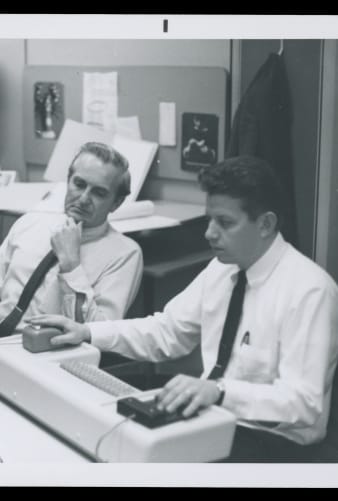

Herman Miller Action Office System, November 1968
Artifact
Photographic print
Date Made
November 1968
Summary
In this image, Jack Kelley of Herman Miller Research Corporation uses the first computer mouse and a "chording keyboard" while inventor Douglas Engelbart observes. The setup being tested was used in Engelbart's 1968 demonstration of the oN-Line System. Many computing "firsts" occurred at this "Mother of All Demos," including Kelley's own innovation--the tray shown here is the first mousepad.
Creators
Keywords
Object ID
2010.83.833
Credit
From the Collections of The Henry Ford. Gift of the Family of Robert L. Propst.
Location
Not on exhibit to the public.
Get more details in Digital Collections at:
Herman Miller Action Office System, November 1968
What is The Henry Ford?
The national attraction for discovering your ingenuity while exploring America’s spirit of innovation. There is always much to see and do at The Henry Ford.

Communication Center for Action Office Series, 1964-1967
Artifact
Carrel
Date Made
1964-1967
Summary
Action Office, conceptualized by Robert Propst with final design by George Nelson, was rooted in Propst's research into office function and worker behavior. The system was not a commercial success: manufacturing costs were high, and it was, in Propst's words, "too showy and bright for serious consideration as a middle management tool." Propst went on to design the hugely successful Action Office 2 cubicle-based system.
Place of Creation
Object ID
89.177.96
Credit
From the Collections of The Henry Ford. Gift of Herman Miller, Inc.
Location
Not on exhibit to the public.
Get more details in Digital Collections at:
Communication Center for Action Office Series, 1964-1967
What is The Henry Ford?
The national attraction for discovering your ingenuity while exploring America’s spirit of innovation. There is always much to see and do at The Henry Ford.


Rohde Sideboard, 1941-1942
Artifact
Sideboard (Furniture)
Date Made
1941-1942
Summary
In the early 1930s, industrial designer Gilbert Rohde spurred the American furniture industry's transition from historical revivals to a modern aesthetic. By 1941, he believed that improved economic conditions justified the reintroduction of restrained decorative elements to modern furniture. This sideboard, part of the high-end Paldao series, features clean lines, antique-finish brass pulls, and leatherette upholstered legs.
Object ID
89.177.108
Credit
From the Collections of The Henry Ford. Gift of Herman Miller, Inc.
Get more details in Digital Collections at:
Rohde Sideboard, 1941-1942
What is The Henry Ford?
The national attraction for discovering your ingenuity while exploring America’s spirit of innovation. There is always much to see and do at The Henry Ford.


Herman Miller Inc. Poster, "Exercise," 1979
Artifact
Poster
Date Made
1979
Place of Creation
Keywords
Object ID
89.177.1168
Credit
From the Collections of The Henry Ford. Gift of Herman Miller, Inc.
Location
Not on exhibit to the public.
Get more details in Digital Collections at:
Herman Miller Inc. Poster, "Exercise," 1979
What is The Henry Ford?
The national attraction for discovering your ingenuity while exploring America’s spirit of innovation. There is always much to see and do at The Henry Ford.


Eames Molded Plywood Chair, Given to D. J. DePree in Recognition of His 50 Years of Service to Herman Miller, 1959
Details
Eames Molded Plywood Chair, Given to D. J. DePree in Recognition of His 50 Years of Service to Herman Miller, 1959
Artifact
Side chair
Date Made
1949
Place of Creation
Keywords
Object ID
93.190.15
Credit
From the Collections of The Henry Ford. Gift of Herman Miller, Inc.
Location
Not on exhibit to the public.
Get more details in Digital Collections at:
Eames Molded Plywood Chair, Given to D. J. DePree in Recognition of His 50 Years of Service to Herman Miller, 1959
What is The Henry Ford?
The national attraction for discovering your ingenuity while exploring America’s spirit of innovation. There is always much to see and do at The Henry Ford.